
How to Rank a Plumbing Business in Multiple Cities
Bassem is a 2-time winner of the Canadian Entrepreneur of the Year award and a digital marketing, SEO, and AI strategist with 22+ years of experience managing online marketing strategies for some of Canada's largest companies and international brands, including Canadian Tire, VistaPrint, Remax Canada, Xplornet, Direct Energy, and Toronto Star.
Key Takeaway: To successfully rank a plumbing business across multiple cities, strategy is everything. You must give each physical location its own Google Business Profile, build genuinely unique, value-driven pages for every city you serve, maintain identical business details across the web, and track your booked jobs on a city-by-city basis.
The biggest mistake? Copy-pasting one page and just swapping out the city name.
When a plumbing company expands its service area across two or three cities, relying on a single homepage and one Google Business Profile is no longer enough. Growth requires a multi-location SEO strategy. This guide breaks down exactly what you need to build, the spam tactics you must avoid, and the metrics that actually matter to your bottom line. It sits alongside our comprehensive marketing for plumbers strategy.
Can one plumbing company rank in every city it serves?
Yes, but you can’t achieve it with a single profile and a single landing page. Google’s local search results are built on three pillars: relevance, distance, and prominence.
Each city requires distinct evidence that your plumbing business is relevant to the searcher, physically nearby, and highly regarded in that specific community. The hardest factor to satisfy is distance: you can't magically appear "near" a searcher in a city where you have zero physical footprint. Everything in this guide focuses on building that local evidence honestly and effectively.
How many Google Business Profiles should a plumber have?
The rule is simple: one profile per real, physical location, not one per city you serve.
According to Google's guidelines, a service-area business should maintain one profile for its central office (specifying a designated service area) and should not create multiple profiles for a single location.
- When to add a profile: A second Google Business Profile is only legitimate when you open a secondary branch with its own dedicated staff and a real, permanent address.
- What doesn't count: Virtual offices do not qualify unless they are physically staffed during your stated business hours. Furthermore, Google typically expects your service area to remain within a two-hour drive of your primary base.
Simply listing a dozen cities in your Google profile’s "service area" field won't automatically make you rank in all of them. Distance still matters, and Google measures it from your verified business location. Effective local SEO services always start with this foundational rule.
How to avoid the "doorway page" penalty of Google?
Google’s spam policies specifically target "doorway pages" or the pages created solely to rank for similar searches that funnel users to a less useful intermediate page. Taking your main homepage, copying it ten times, and just swapping out the city name is the textbook definition of doorway abuse.
To earn its ranking, a city page must provide genuine value tailored specifically to that location. Here is what a high-quality city page should include:
- Local Nuance: Discuss the specific neighbourhoods and housing types you service in that city (e.g., historical homes needing pipe replacements vs. new builds needing rough-ins).
- Municipal Details: Include local permit requirements, licensing rules, and relevant municipal rebate programs.
- Proof of Work: Showcase real jobs, project photos, and embedded Google reviews explicitly from clients in that area.
- Logistics: Highlight the specific crew that covers the region and provide honest, accurate response times.
- Local FAQs: Answer the actual questions residents in that city are searching for.
The Swap Test: If you swap the city name on your page and the content still makes perfect sense for another town, your page isn't localized enough. Every city page should feature at least two substantial sections of content that cannot apply to any other location.
Which cities actually deserve their own page?
Don't build a page for every tiny hamlet in your radius. Only create pages for cities where:
- You do enough volume to have something real and specific to say.
- Prospective customers are actively searching for a plumber using that specific city name.
Check your Google Search Console to see which cities are already generating impressions, then cross-reference that with your dispatch history to see where your trucks are actually going. A few highly detailed, authoritative city pages will always outperform a dozen "thin" pages.
How do you keep your business details consistent across locations?
Consistency is critical. You must use the exact same Business Name, Address format, and Phone number (NAP), along with consistent business hours and categories across your website, your Google Business Profile, and all local directory listings.
If you have multiple physical locations, give each branch a unique local phone number that rings directly to that office. Discrepancies in your business information confuse Google and AI search assistants, diluting your local authority. Fortunately, this is one of the easiest SEO problems to audit and fix.
How do you show up in AI answers for "best plumber near me"?
Generative search is changing the game. ChatGPT, Google AI Overviews, and AI-powered Maps are increasingly answering local queries. At Green Lotus, our working view is that these AI assistants heavily favour pages that answer questions directly and businesses that are frequently cited by other authoritative sites.
While appearing in AI overviews is something we track and measure, no agency can guarantee it. For a deeper dive, read our guide on AI search for plumbers.
How do you measure rankings city by city?
Never settle for a single, blended traffic metric. If you are targeting multiple cities, you must track performance locally. Measure these three metrics by city:
- Search Visibility: Track Search Console impressions and clicks specifically for pages and queries containing the city name.
- Profile Engagement: Monitor calls, direction requests, and website clicks for each individual Google Business Profile.
- Bottom-Line ROI: Track calls, text messages, and booked jobs by city in your monthly dispatch reports.
Ultimately, your cost-per-booked-job in each specific city will tell you where to double down with new content, and where to pull back.
What changes for a plumbing franchise or multi-branch operation?
If you operate a franchise or have several physical branches, each location requires its own Google Business Profile, its own local phone number, and its own dedicated location page.
Typically, the overarching brand sets the technical SEO rules, while the local branch supplies the boots-on-the-ground photos, reviews, and localized content. If this fits your model, review our franchise marketing services page.
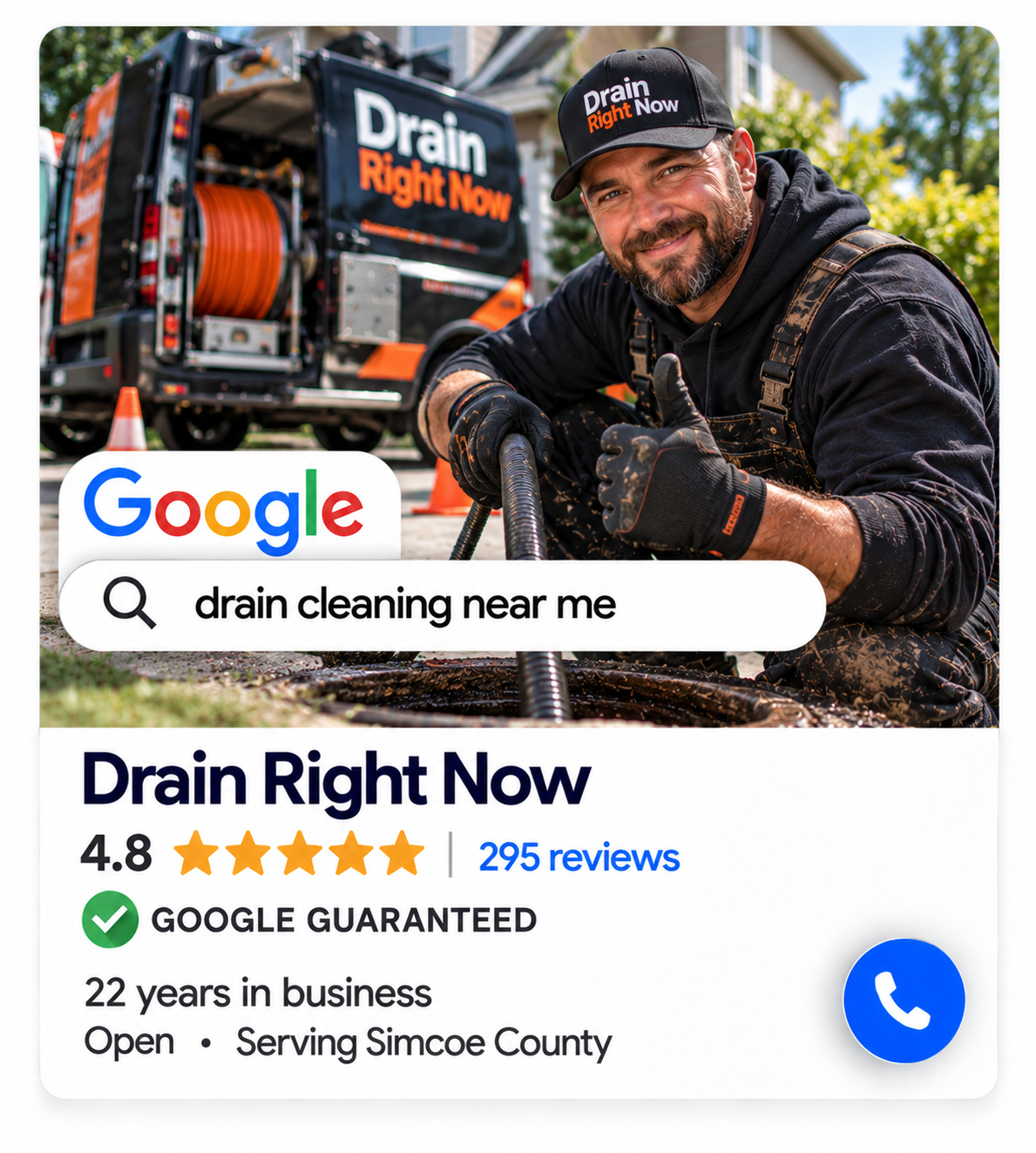
Fast-Tracking Local Lead Generation Organic city pages take time to rank. While your SEO builds authority,Google Local Services Ads management (GLSA) is the most effective paid route to generate immediate leads in a new city. For example, Drain Right Now, a plumbing and well-repair company, received 127 real leads in 60 days utilizing this Pay-Per-Lead strategy.
Read the
Drain Right Now case study: 127 real leads in 60 days.
Frequently Ask Questions
Can I rank in a city where I have no physical office?
Yes, it is possible to rank in the regular organic search results if your dedicated city page is highly authoritative, specific, and optimized. However, ranking in the Google Maps (Local Pack) is much harder because distance is strictly measured from your verified physical location.
Do I need a separate website for each city I serve?
No. Maintaining one centralized website with distinct, highly optimized pages for each city is far more effective. This approach consolidates your domain authority in one place rather than splitting it across multiple weak sites.
Is the "service area" list in my Google profile enough to rank?
No. While it tells Google where you are willing to travel for work, simply listing cities does not provide the relevance or prominence signals required to actually rank in those locations.
Should I buy city pages in bulk from an SEO agency?
Absolutely not. Agencies that generate pages in bulk typically use identical copy with only the city name changed. This is exactly the pattern Google’s "doorway page" policy is designed to penalize.